
.jpeg)
How to Choose a 3PL in Dallas: The Complete Guide for Growing Brands
Whether you're shipping 50 orders a month or 5,000, picking the right logistics partner is one of the most important decisions you'll make. Here's what to look for — from someone who built a 3PL from scratch in the middle of DFW.
I'll be so honest with you:
When you're running an e-commerce brand — whether you're based in Dallas, New York, London, or anywhere in between — there's a moment you hit where packing boxes yourself just doesn't work anymore. Maybe your garage is full. Maybe you're missing orders. Maybe your day is disappearing into tape guns and shipping labels instead of growing your business.
That's when you start Googling "3PL Dallas" or "fulfillment center Texas" or "how do I even outsource my shipping?"
And then you find about a hundred options and you have no idea how to compare them.
I'm Daryl Kosoris. I started KTX 3PL in May 2020 with a single 16-foot box truck, and we've grown to 500,000+ square feet across three DFW facilities. I've talked to hundreds of brand owners about this exact decision. This guide is what I'd tell you if you were sitting across the table from me.
Why Dallas Is the Smartest Place to Base Your Fulfillment (Even If You're Not From Here)
Before we get into how to choose a 3PL, let's talk about geography — because it matters more than most people realize.
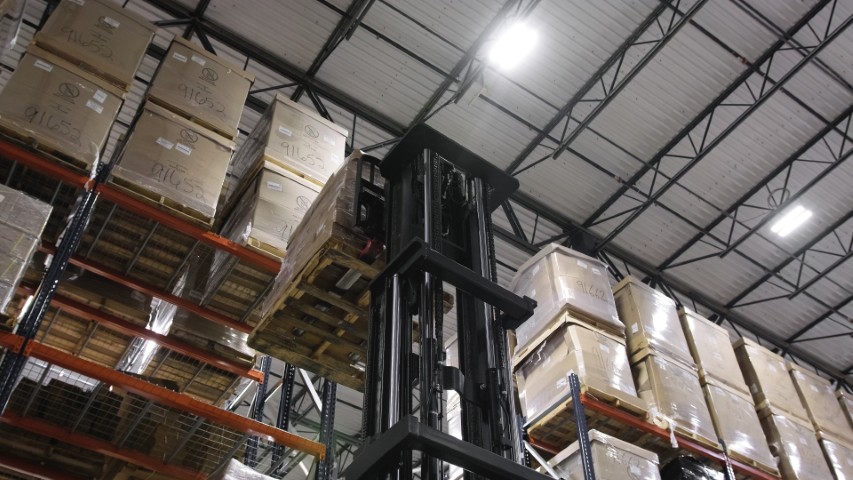
Dallas-Fort Worth sits at the geographic center of the continental United States. That's not a marketing line — it's literally true. From a DFW warehouse, a standard ground shipment reaches approximately 80% of the U.S. population within two days. You're roughly the same distance from New York as you are to LA. You're a single transit day from Houston, San Antonio, and Austin.
That central positioning is a genuine competitive advantage for your brand's shipping speed and cost — regardless of where your customers actually are or where you're headquartered. We work with brands from across the country and around the world: Canada, the UK, Australia, and elsewhere. They're not choosing us because they're based in Texas. They're choosing us because Dallas makes sense as their U.S. fulfillment hub.
A few other things that make DFW a logistics powerhouse:
- DFW International Airport is one of the busiest air cargo hubs in the country — critical for fast international imports
- Two Class I rail lines (BNSF and Union Pacific) run through the DFW metro — major for freight consolidation and transloading
- Texas has no state income tax — keeps operational costs lower across the supply chain
- Highway 35, 45, 30, 20, and I-820 all converge in DFW — making truck routing highly efficient
- A booming industrial real estate market means 3PLs here have access to modern, large-scale facilities
When you pick a DFW fulfillment partner, you're not just picking a random city — you're picking a logistics network.
What to Actually Look for in a 3PL Partner
This is the shortlist I'd use if I were a brand owner evaluating a Dallas 3PL from the outside:
1. Accuracy Rate — And Can They Prove It?
A 3PL's single most important job is to get the right product to the right customer on time. Ask every provider you're evaluating for their order accuracy rate. If they can't answer immediately, that's a red flag.
At KTX, we maintain a 99%+ order accuracy rate, a 99%+ same-day shipping rate, and a 99%+ inventory accuracy rate. Those numbers aren't just random fluff metrics — they come out of our Warehance WMS (warehouse management system), and clients can log in and see real-time data at any point.
If a 3PL can't give you a real accuracy number backed by real data, I would keep looking.
2. Technology — Real-Time Visibility or Bust
You should be able to see your inventory, your open orders, and your shipment tracking in real time. Not in a spreadsheet emailed on Tuesdays. Right now, from your phone.
Ask any 3PL you're evaluating: "Can I log in and see my inventory right now?" If the answer isn't a firm yes, their tech infrastructure isn't where it needs to be.
Also ask about integrations. A modern 3PL should connect directly to Shopify, Amazon, Walmart, WooCommerce, and Etsy without requiring you to manually upload order files. Seamless integration is the difference between a 3PL that saves you time and one that creates more work.
3. A Dedicated Account Rep — Not a Support Ticket Queue
One of the biggest complaints people have about large national 3PLs — and if you read the Trustpilot reviews for ShipBob (3.8/5) and ShipMonk (3.7/5), this comes up constantly — when something goes wrong, you're filing a support ticket and waiting. There's no one who actually knows your business.
At a well-run local 3PL, you should have a dedicated account rep who knows your SKUs, your seasonal patterns, and your preferences. Someone you can call or text. Someone who answers.
I personally stay accessible to our clients — including on weekends (probably to my wife's detriment). That's not a scalable model forever, but it reflects the culture we've built: people over process.
4. Flexibility and No Arbitrary Minimums
A lot of national 3PLs require minimum order volumes before they'll even talk to you. ShipBob reportedly requires 1,000+ orders per month for their standard service tier. If you're a growing brand not there yet, you're locked out.
The right 3PL partner should grow with you — not have you jumping through hoops to qualify. Whether you're shipping 100 orders a month or 10,000, you deserve the same level of service. Look for a provider that's upfront about pricing and doesn't bury fees in fine print.
5. Full-Service Capabilities Under One Roof
Every time you have to work with a separate vendor for a different logistics service, you're adding complexity, communication overhead, and potential failure points. The best 3PL relationships are with partners who can handle everything:
- Order fulfillment (DTC and B2B)
- Amazon FBA and FBM prep
- Kitting and custom assembly
- Returns management
- Cross-docking and freight coordination
- Short and long-term storage
If a 3PL only does one or two of these, you'll eventually outgrow them or have to manage multiple vendor relationships. The most efficient supply chains run through one trusted partner.
6. Physical Space and Capacity to Handle Growth
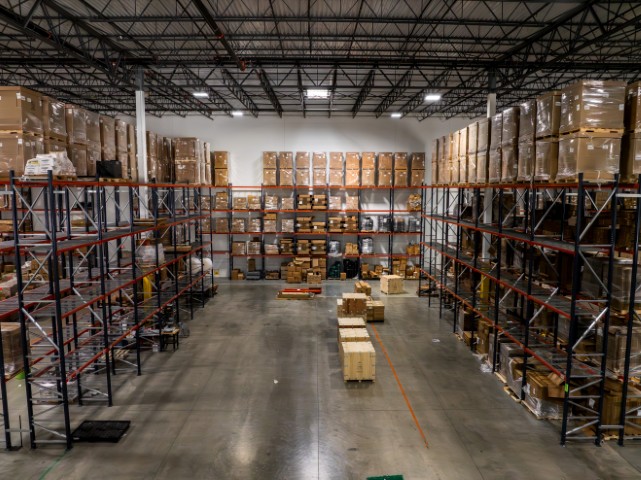
Find out how much space a 3PL actually has — not just how much they're marketing. A 10,000 sq. ft. warehouse that's at 90% capacity is not a good long-term partner. Ask about their current utilization, their ability to scale storage space with your growth, and whether they've had to turn away clients due to capacity constraints.
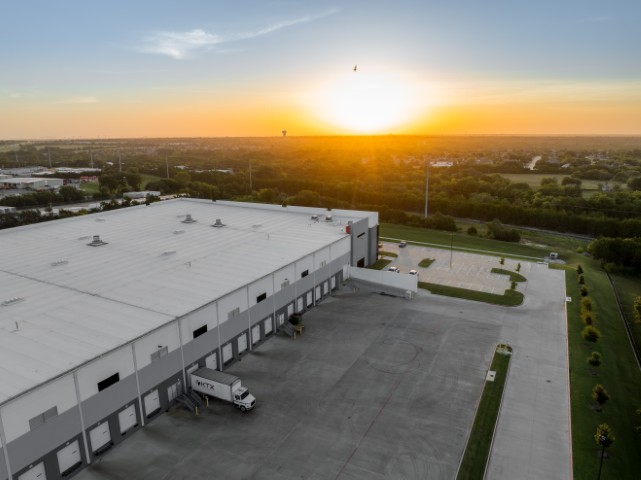
KTX currently operates 500,000+ sq. ft. across three DFW facilities in Waxahachie, Arlington, and Cedar Hill. We expanded specifically because our clients' businesses grew and we needed to grow with them.
Red Flags to Watch Out For
After years of watching brands choose the wrong 3PL and then switch to us, these are the problems I see over and over:
- Hidden fees. Long-term contracts are one thing. But surprise fees for receiving, account setup, "handling," or minimum monthly charges that weren't in the original quote are a sign of a bad-faith partner. Get everything in writing before you sign.
- No real-time inventory visibility. If you can't log in and see your stock levels right now, you're flying blind. This is non-negotiable in 2026.
- Slow response times. A 3PL that takes 48+ hours to respond to a problem is not a partner — they're a vendor. You need someone who treats your business like it matters.
- No references or reviews. Any reputable 3PL should be able to point you to real client reviews on Trustpilot, Google, or similar platforms. Low review volume or a pattern of complaints about the same issues is a major red flag.
- Unwillingness to let you tour the facility. If a 3PL won't let you see their warehouse, ask yourself why. You should be able to walk the floor, meet the team, and see how your products will actually be handled.
One of the things we're most proud of at KTX is our Trustpilot profile — all 5-star reviews, including a nonprofit that used our flexible warehouse space to distribute toys to 15,028 children in Ellis County. We'd rather let our clients speak for us than oversell ourselves.
Local 3PL vs. National 3PL: The Real Difference
You've probably seen the big names — ShipBob, ShipMonk, Shipfusion. They have massive domain authority, fancy websites, and thousands of posts explaining why you need them. So why would you choose a regional DFW 3PL instead?
Here's the real tangible difference:
This isn't about knocking the nationals. ShipBob works well for certain brands at certain scale. But if you're a growing brand that wants a real human relationship, visit-ability, and flexibility — a DFW-based 3PL is often the better fit.
The Questions You Should Ask Every 3PL Before You Sign
Walk into every conversation with this list. The quality of the answers will tell you a lot:
- What is your current order accuracy rate, and where does that data come from?
- What WMS (warehouse management system) do you use, and can I see a demo of the client portal?
- Who will be my dedicated point of contact, and how quickly do they typically respond?
- What integrations do you support — Shopify, Amazon, Walmart, WooCommerce?
- Are there order minimums, and what happens if my volume fluctuates seasonally?
- Can you provide a full breakdown of all fees — receiving, storage, pick-and-pack, returns?
- Do you support Amazon FBA prep? What services specifically?
- Can I tour your facility before committing?
- What is your process when something goes wrong — a lost shipment, a mis-pick, an inventory discrepancy?
- Can you provide references from brands similar to mine in size and product category?
A good 3PL answers all of these without hesitation. A great one already has documentation ready.
The DFW Advantage: Why Central U.S. Beats Both Coasts for Most Brands
If your brand ships nationally — and most e-commerce brands do, regardless of where you're located — shipping zone math is the key.
Shipping carriers (UPS, FedEx, USPS) calculate rates based on zones, which are determined by distance between origin and destination. The further you ship, the more it costs and the longer it takes.
A warehouse in Los Angeles is Zone 8 from New York. A warehouse in Dallas is Zone 4 or 5 from both coasts. That difference compounds across every single shipment you send. For high-volume brands, fulfilling from the geographic center of the country can reduce average shipping costs by a meaningful margin per order.
That's why brands based in Canada, the UK, Australia, and across the U.S. choose to warehouse their U.S. inventory in DFW. Not because Texas is exotic — because the math works.
A Little About KTX — Since You're Considering Dallas Options
I started KTX in May 2020 with a single box truck and a lot of stubbornness. COVID hit and flipped everything upside down — clients went under, new prospects wouldn't touch a brand-new carrier. I pivoted to freight brokerage, did close to $1 million in revenue that first year, then evolved again into full 3PL warehousing.
We started in a 10,000 sq. ft. subleased space. Today we run three facilities across DFW — Waxahachie, Arlington, and Cedar Hill — totaling 500,000+ sq. ft. We're family-owned. I'm from Ellis County. This business is personal.
Our clients include e-commerce brands on Shopify and Amazon, B2B distributors, nonprofits, and brands shipping internationally. We've handled everything from standard DTC fulfillment to a Toys for Tots campaign that moved toys to 15,028 kids. Every client gets a dedicated account rep and real-time inventory access through our Warehance WMS.
We're not the biggest 3PL in Texas. But we show up, we answer the phone, and we take your inventory as seriously as you do.
Frequently Asked Questions
What is a 3PL?
A 3PL (third-party logistics provider) is a company that handles warehousing, order fulfillment, and shipping on behalf of another business. Instead of managing your own warehouse, you store your inventory with a 3PL and they pick, pack, and ship orders to your customers. Most 3PLs also offer additional services like Amazon FBA prep, kitting, returns management, and freight coordination.
How much does a 3PL cost in Dallas?
3PL pricing varies based on your order volume, product size and weight, required services, and storage footprint. Most Dallas 3PLs charge separately for receiving, storage (per pallet or cubic foot), pick-and-pack per order, outbound shipping, and additional services like kitting or FBA prep. At KTX, we provide transparent, all-in quotes — reach out for a custom rate based on your specific needs.
Do I need a 3PL for my Shopify store?
Not necessarily — but once you're shipping more than 50–100 orders a day, a 3PL almost always makes financial and operational sense. A good 3PL connects directly to your Shopify store, automatically pulls orders, ships them same-day, and syncs tracking back to your store. KTX integrates directly with Shopify with no manual file uploads required.
What's the difference between a 3PL and a fulfillment center?
The terms are often used interchangeably. Technically, a fulfillment center is a facility focused on picking, packing, and shipping orders. A 3PL is a broader category that includes fulfillment but also covers freight brokerage, transloading, cross-docking, kitting, and other supply chain services. Most modern 3PLs operate fulfillment centers as part of a larger service offering.
Do I have to be based in Texas to use a Dallas 3PL?
Absolutely not. Many of our clients are based outside Texas — some outside the U.S. entirely. Your inventory ships to our DFW facilities, and we fulfill orders to your customers wherever they are. Dallas's central location typically means faster, cheaper ground shipping compared to fulfilling from either coast.
How do I switch from my current 3PL to a new one?
Switching 3PLs is more straightforward than most brands expect. The general process involves auditing your current inventory, coordinating an inbound transfer to the new facility, connecting your e-commerce platforms to the new WMS, and running a brief parallel period before fully cutting over. KTX has helped multiple brands make the switch — we walk you through every step so you don't drop a single order in the process.
Let's Get Your Products Moving
KTX 3PL is a family-owned DFW fulfillment partner serving brands from across the U.S. and around the world. 500,000+ sq. ft. across three facilities. 99%+ accuracy. Same-day shipping. Real people who answer the phone.
